Anúncios
Understand how house cleaner work functions in the USA and discover where Brazilians can find job opportunities.
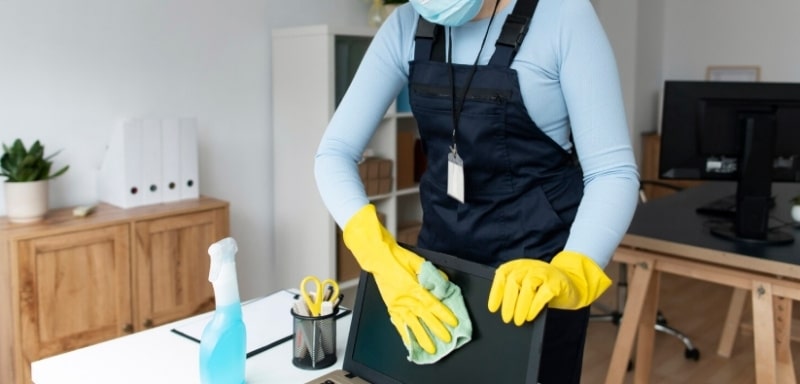
Being a house cleaner in the US means offering flexible domestic services with quick income. Many work as freelancers, receiving payment upon completion of tasks, while partnerships with outsourced companies help secure regular clients.
This profession can be a gateway for those starting as assistants and seeking to develop practical skills. The daily routine demands physical effort, attention to detail, and punctuality.
There are two common formats: working through a company or as an independent professional. Each option changes the routine, support, and supply of materials.
With a few months or years of practice, the person gains speed, confidence, and usually increases earnings through referrals. This guide shows, step by step, how to understand the roles, seek opportunities, and create a simple method for delivering professional service at home and in other locations.
Anúncios
What does a house cleaner do in the US and what is their daily routine like?
Self-employed vs. outsourced company
A housekeeper works without a formal contract, usually works 1-2 times a week, and is paid at the end of the service. There is flexibility in scheduling, but less support in marketing and client relationships.
Professionals working for companies follow a schedule, receive payment, and have defined standards. Support ensures consistent clients, but reduces autonomy over hours and services.
Most common tasks in houses and apartments
A typical scope of tasks includes: washing, drying, and putting away dishes; making beds; taking out the trash; sweeping and mopping; organizing closets; and cleaning the inside of the refrigerator and microwave.
These tasks align expectations between the client and the professional, reducing rework.
Critical environments and types of service
Bathrooms and kitchens require more attention, as they define the final perception of the service. Bedrooms and service areas receive maintenance and organization.
Anúncios
There are two main types: light routine (more organization and maintenance) and complete cleaning (washing floors, windows, and cleaning the inside of cabinets). The type chosen alters the time, level of detail, and product selection.
Practical example: quick routine — 60–90 minutes; complete cleaning — several hours.
Where can I find cleaning jobs and opportunities in the United States?
Many Brazilians find job opportunities through referrals, in neighborhood groups and local communities. Online platforms and advertisements also generate opportunities. In addition, cleaning companies often hire those seeking a more predictable routine.
Direct job opportunities with clients versus companies: pros and cons
Direct with client: offers autonomy to negotiate price and schedules.
Through company: provides stable cash flow and access to client portfolios, accelerating the learning curve for beginners.
How can I increase my chances of being called back?
Demonstrating skills such as punctuality, meticulousness, and good communication helps win over the client. Confirming the scope of work before the service avoids misunderstandings.
Maintaining polite contact after the visit and requesting feedback increases the chances of repeat business.
How to start a cleaning job from scratch?
A well-planned routine is the secret to delivering consistent services and gaining clients. Before entering the premises, define a schedule by room and place the equipment near the area to be serviced.
Creating a practical schedule
Create a fixed sequence: bedrooms → living rooms → kitchen → bathrooms.
Order of tasks for the day
Start with dust, move on to surfaces, then glass, and finish with the floor.
Safe techniques for bathrooms
Use appropriate products, check for allergies, and ventilate the room.
Agility in high-traffic environments
Mapping out off-peak hours prevents inconveniencing residents or employees.
Equipment organization
Keep kits organized by room and specific cloths for each area.
Types of service and posture
Explain the difference between light routine cleaning and deep cleaning.
Professional conduct: politeness, discretion, and clarity when communicating boundaries.
Types of services offered (light routine vs. full cleaning)
Light routine (maintenance)
Ideal for weekly or bi-weekly visits, focusing on maintenance and organization.
Complete cleaning (deep cleaning)
This includes corners, baseboards, tiles, and interiors — it requires more time and skill.
Conclusion
Reputation and repeat customers are born from consistency, good communication, and respect for others’ space.
Understanding roles, choosing the type of service, and applying a clear method for each room improves service quality. With practice, rhythm, referrals, and better agreements emerge.
Quick plan: define service area, create a checklist for each room, test the schedule for a week, and adjust based on feedback.

Daniel Fernandes
Especialista em crédito financeiro. Produtor de conteúdos digitais e redator web. Atua com produção de conteúdos sobre educação financeira e deseja levar seus conhecimentos práticos para mais pessoas e assim ajudá-las a lidar melhor com seu dinheiro.
Publicado em: 27 de janeiro de 2026