Anúncios
Start with method: clear service, checklist, and first clients.
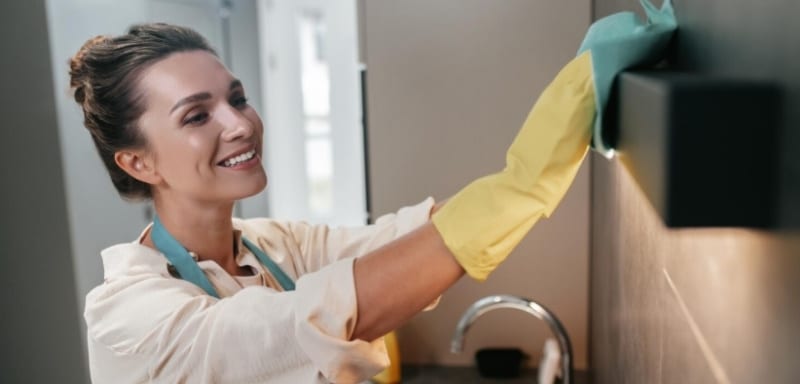
Starting as a house cleaner in the United States is a practical route for those who want to enter the service market with limited resources and daily work.
The market includes houses, apartments/condos, and light commercial properties, with a constant demand for recurring cleaning and one-off services such as deep cleaning and move-outs.
Anúncios
This guide shows you how to offer a clear service, create a process with a checklist, calculate an estimate, and confidently close your first clients.
You will also learn how to use a free estimate as an entry point, gradually improve your cleaning kit, and transform freelance work into a recurring and stable schedule.

Anúncios
Key points
- Quick roadmap to starting in the cleaning and services market in the USA;
- Opportunities in homes, condos, and light offices;
- Using checklists and standards for professional consistency;
- How to calculate estimates and offer free estimates;
- How to transform one-off services into a recurring job with a method.
What does a house cleaner do in the United States, and why is the demand so high?
Cleaning professionals follow practical routines that generate predictable results. The work involves cleaning by room, caring for surfaces, and delivering a standardized finish.
Work routine: home, apartment/condo, and light office.
In homes, the day begins with arrival, a quick inspection, and prioritization. Then, the sequence is usually: kitchen → bathrooms → bedrooms → common areas.
In apartments/condos, the smaller space demands a faster pace and respect for condominium rules. The standard is the same, but with time optimization.
In offices and small businesses, the focus is on discretion and efficiency. The expectation is to maintain a clean and healthy environment for clients and employees.
What clients value most
Clients pay for reliability, communication, and consistency. The clearer it is what is included (and what is not), the lower the risk of conflict.
Market insight: Companies like Molly Maid highlight trained and insured professionals, with standardized checklists to ensure consistency.
Most requested types of house cleaning and which one to choose to start with.
Choosing the right service from the start increases the chance of a full schedule. The ideal model is one that you can execute with quality and repeat without difficulty.
Practical options to offer
- Recurring (weekly / bi-weekly / monthly): best “entry-level product” because it creates predictability and builds loyalty;
- One-time: sells well, but usually requires more energy per visit;
- Move-in / move-out: higher ticket price, detailed scope, focus on kitchens and bathrooms;
- Deep cleaning (Deluxe): great as an initial “reset” and gateway to recurring business;
- Office / light commercial: objective scope and pre-arranged hours.
Table — choosing a service for beginners
| Type | Rhythm | Complexity | Ideal for |
|---|---|---|---|
| Appellant | Weekly/Bi-weekly/Monthly | Low | Predictable routine and regular customers |
| One-time | Unique | Medium/High | Events and “catching up on housework” |
| Move-in/move-out | Change | High | Properties in transition |
| Deep/Deluxe | Initial/occasional | Very high | Reset and sale/rental |
| Office | Scheduled | Average | Small businesses |
Copywriting technique: recommend the best format without pressuring — this builds trust and reduces objections.
Essential skills and professional standards that open doors
Those who grow quickly are not those who “clean the most,” but those who deliver a repeatable standard.
Quality and consistency standards
What impresses from the start: following a script, keeping to the agreement, and delivering predictable results on each visit.
Details the client notices: surfaces without any missed spots, neutral scent, sparkling bathrooms, and visual organization.
Professional conduct and respect for property
- Punctuality and confirmation message;
- Immediate notification in case of delay;
- Protect fragile items and respect off-limits areas;
- Note any pre-existing damage to avoid conflicts.
Quick questions before the first visit: priorities, allergies, pets, preferred products, and frequency.
“Standards + behavior = retention.” When you are trustworthy, it leads to referrals and recurring contracts.
Professional checklist: how to clean methodically and always deliver results?
A checklist is what transforms manual work into a professional process. It reduces errors and facilitates improvement.
Market benchmarks
Companies use extensive checklists (e.g., 40–44 points) to maintain standards. The logic is simple: minimum standard + customization based on customer preference.
Flow through rooms to save time
- Start with dry, high areas;
- Leave bathrooms for last;
- Finish with floors to avoid soiling what has already been cleaned.
Practical mini-method
- Remove heavy dust;
- Clean surfaces and touchpoints;
- Detail mirrors, glass, and grout;
- Vacuum/sweep and mop floors.
Customization and quality control
The checklist becomes a “contract of expectations.” Before leaving, do a mental walkthrough and review critical points.
Basic kit and products for safe home cleaning
A simple kit solves 80% of the job. The secret is a versatile product + the right cloth + a safe procedure.
Basic kit items
- Multipurpose (for various surfaces);
- Glass cleaner;
- Light degreaser (kitchen);
- Product specifically for bathrooms;
- Microfiber cloths, gloves, and labeled bottles.
Good usage practices
- Label bottles and transport safely;
- Never mix chemicals;
- Follow instructions and contact time for disinfection;
- Test on a small area when necessary (especially with allergies/pets).
Green cleaning as a differentiator
Offering eco-friendly options on demand can increase trust, especially in homes with children and pets.
Table — products and use
| Product | Typical use | Advantage |
|---|---|---|
| Multipurpose | Countertops, furniture | Versatile; fewer bottles |
| Glass | Mirrors, windows | Flawless finish |
| Degreaser | Kitchen | Removes oil efficiently. |
| Bathrooms | Sinks, toilets, tiles | Shine and hygiene |
How to price and offer a free estimate without stalling the negotiation?
The proposal needs to be clear and objective. Free estimate works because it takes the pressure off an immediate “yes”.
Variables that impact the estimate
- Number of rooms and bathrooms;
- Property condition (accumulation/pets);
- Frequency (recurring reduces effort);
- Type of service (maintenance, deep cleaning, move-out).
Tailor-made proposal (homes and businesses)
List the scope by environment and include optional add-ons (oven, refrigerator, blinds).
For businesses: lean scope, off-peak hours, and monthly contract.
When should I request a viewing of the property?
Recommended for: first cleaning, large property, specific request (oven, windows, grout) or uncertainty about condition.
Table — when to request a visit
| Variable | Impact | Quando pedir visita |
|---|---|---|
| Number of rooms | High | Always at the first quote |
| Condition/pets | Medium/High | If there is an accumulation |
| Frequency | Medium | To set discount/routine |
Copy CTA (without sounding aggressive): ask for a free estimate with 4 questions: rooms, bathrooms, frequency, pets. This opens a conversation and accelerates the first sale.
How to organize your daily life: time, schedule, and logistics.
Organization avoids delays and enhances reputation — which is what generates repeat business.
Schedules and alignment
Combine access (key/code), priorities, and 24-hour advance confirmation. Short messages reduce no-shows and noise.
Time by type of service
- Recurring maintenance: tends to be faster
- Deep cleaning: requires more steps and time
- Move-out: allow extra time for details and inspection
Solo vs team
Solo work offers control and reduces costs, but limits scalability. Team work delivers faster and handles larger properties, but requires leadership and a consistent standard.
Practical tip: Group jobs by neighborhood and allow 20–40 minutes between jobs for traffic, parking, and setup.
How to prepare a client’s home for efficient cleaning?
Preparation reduces rework and improves the visible result.
Simple guidelines (without being embarrassing)
Ask them to keep surfaces clear: toys, clothes, and dishes off the countertops. This speeds up the process and improves the finish.
Pets and access
Specify where the pet will stay and detail access: key, code, gatehouse, alarm, and parking.
Matching items (e.g., bed sheets)
If a change of sheets is included, ask for fresh bedding to be available. If not, treat it as an add-on.
How to win over customers: trust, reviews, and referrals.
What constitutes scale is recurring revenue + reviews + referrals.
To deliver peace of mind
Arrive on time, follow the checklist, and report any unforeseen events. A finishing touch (cushions, trash, mini-report) increases the perceived value.
How to encourage reviews?
Ask for feedback with a direct link after 2-3 highly rated services. No pressure.
Simple referral program
Create a “refer friends” program: credit for those who refer others and rewards based on volume (e.g., a free cleaning after X referrals).
Table — what increases indications
| Element | Why it works | Example |
|---|---|---|
| Consistency | It builds trust | Standard checklist + punctuality |
| Request a review | It facilitates evaluation | Message with link after 3 services |
| Refer friends | Convert satisfaction into marketing | Credit + reward |
Freelance or team? How to choose the best way to start?
A escolha muda ritmo e responsabilidade.
Joining a structured company
You get a checklist, schedule, and support. It’s great for learning quickly and reducing risk.
What should you look for before accepting?
Clarity regarding payment, product supply, realistic expectations, and a culture of respect.
Simple rule: autonomy = profit margin; team = workflow and training. Start where you need the most security.
Add-ons and specializations that increase the ticket price.
Add-ons increase average order value without needing to find new customers.
Items that sell well
- Interior of oven and refrigerator
- Blinds and ceiling fan
- Show-ready for real estate
- Vacation rental/Airbnb (guest-ready)
Table — when to offer add-ons
| Service | Focus | Perceived value | When to offer |
|---|---|---|---|
| Oven | Fat/residue | High | Deep or add-on |
| Refrigerator | Smell/shelves | High | Monthly/one-time |
| Blinds/fan | Hard dust | Medium/high | Every 2–3 months |
| Guest-ready | Quick spin | Very high | Turnover contracts |
Where to operate: area served, target audience, and local positioning.
Starting in a few neighborhoods reduces traffic and increases punctuality.
Define a starting radius
A small radius (e.g., 8–12 km) facilitates routing and logistics. Record actual times and adjust according to demand.
Residential vs. office
For homes: comfort and convenience.
For the office: hygiene, discretion, and operational consistency.
Table — decisions that improve the agenda
| Decision | Benefit | How to measure |
|---|---|---|
| Restricted radius | Less traffic | Average travel time |
| List of areas | Clarity and confidence | Contact rate by area |
| Segment (home/office) | Right message | Closing rate by type |
Conclusion
The best way to move forward is to define short, measurable steps. Start with 1-2 services, a simple checklist, and a basic, reliable kit.
To recap: understand the types of cleaning, adopt standards, organize your schedule, and use free estimates to open conversations without pressure and close them clearly.
Next steps: create a script of questions (rooms, bathrooms, pets, frequency), send a concise proposal, and confirm expectations in writing. With this method, you become a reliable professional, gain reviews, and receive referrals.

Daniel Fernandes
Especialista em crédito financeiro. Produtor de conteúdos digitais e redator web. Atua com produção de conteúdos sobre educação financeira e deseja levar seus conhecimentos práticos para mais pessoas e assim ajudá-las a lidar melhor com seu dinheiro.
Publicado em: 27 de janeiro de 2026